Sofia Backlund (she/her)
sofiamaria.backlund@ist.ac.at
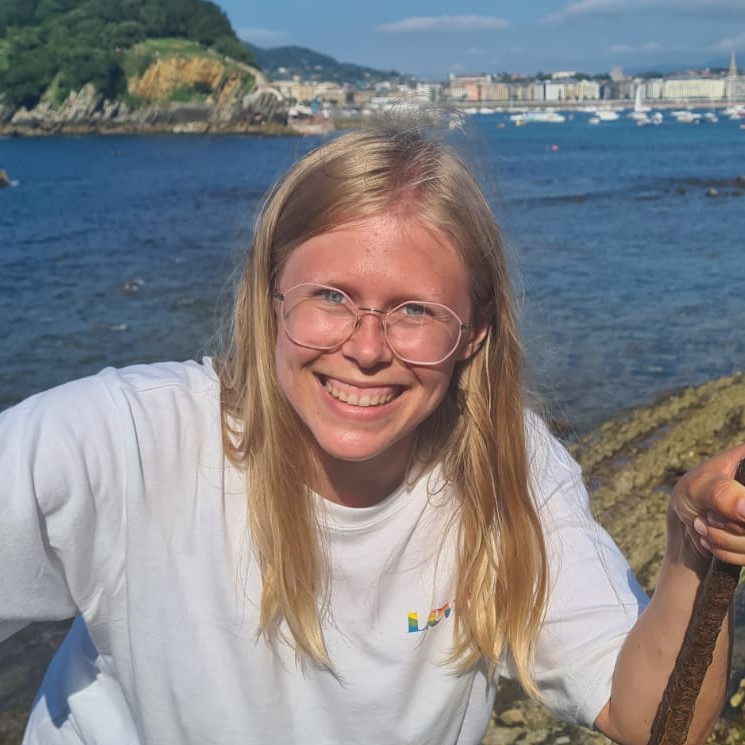
I joined the group in 2023 with a background in biomathematics. My interest is in spatial population genetics, in particular in the effect of different heterogeneities in both space and time on identity by descent. This involves questions about the effect of heterogeneous population density and the effect of a seed bank. In my work, I combine theory, simulations and data, as well as some fieldwork. My goal is to work on the interface between ecology and evolution, looking at the effects of certain ecological processes on evolutionary timescales.
Céline Camila Coraly Bräutigam (she/her)
camila.braeutigam@ist.ac.at 
I joined the Barton group in 2022 as a PhD student under the co-supervision of Gasper Tkacik. I am interested in the evolution of gene regulatory systems. Using theoretical frameworks, I am trying to compare the efficiency of adaptation under different genomic encodings of regulatory information.
On a small scale, this encompasses the evolution of single transcription factor binding sites based on biophysical binding models. I study possible mechanisms and parameters of transcription factors that speed up the evolution of new binding sites. On a large scale, the interaction of many transcription factors and many binding sites across the genome will shape the adaptive landscape of complex polygenic traits. I aim to understand better how features of transcriptional regulatory architecture influence the efficiency of polygenic adaptation.
Hila Lifchitz (she/her)
hila.lifchitz@ist.ac.at
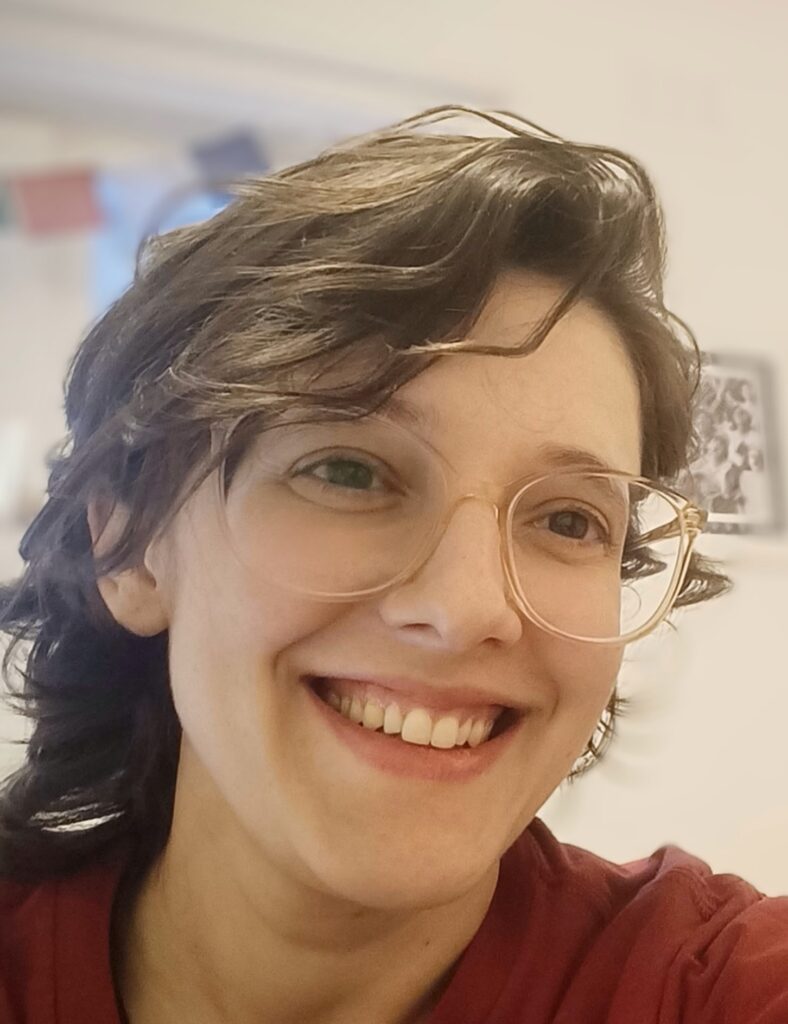
I joined the Barton group in 2023. My background is in pure mathematics, so I take a more formal approach in asking how can we distinguish signals of selection from background “noise” resulting from intricate population structure. More specifically, I aspire to develop a theoretical framework that incorporates linkage into Fisher’s infinitesimal model. For instance, if we could aptly characterize an expected distribution of segments of a foreign chromosome with a selective advantage as it diffuses in a homogeneous population over time, how would linkage become apparent? How might selection impact the locations and sizes of the remaining foreign segments?
I am co-affiliated with the Maas stochastic analysis group.
Stepan Ovchinnikov
stepan.ovchinnikov@ist.ac.at
Evgeniya Pravdolyubova
evgeniya.pravdolyubova@ist.ac.at
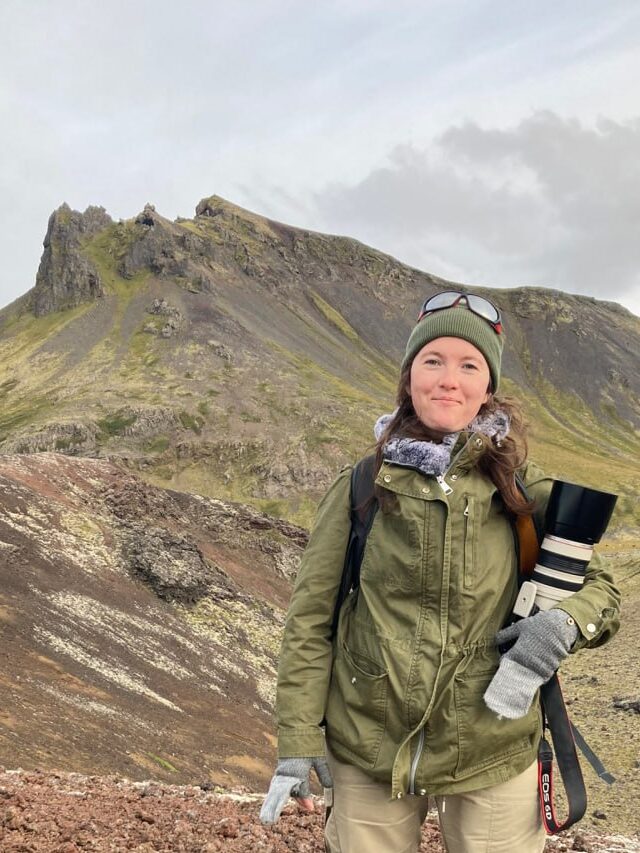
I joined the group in 2023 as PhD student to explore the self-incompatibility in snapdragons. This is an example of gametophytic non-self-recognition system, when a haploid pollen tube must detoxify 2 RNAses of a diploid pistil. Homologous systems are known across different dicots. They require tight linkage, and the genes for toxins and antitoxins are located in a region with suppressed recombination, known as the S-locus.
In Antirrhinum, the S-locus is especially complex, and each self-incompatibility haplotype carries approximately 30 antitoxins (F-box proteins). The diversity of S-RNAses is not yet fully described, and we do not yet know the total number of S-alleles, though it is clear there are many. I combine experimental and bioinformatics approaches to fill those knowledge gaps and to understand why and how such allelic diversity emerged. I’m also interested in how balancing selection acts, given the spatial structure of snapdragon populations and the limits for pollen and seed dispersal.